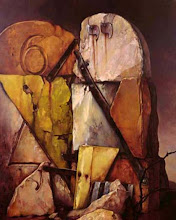
Study the paining "The Family" by Samuel Bak (click on the link below) and reflect on any connections you might see between this painting and "Thou Shall Not Kill."
http://www.puckergallery.com/Family_enl.html


Subscribe to:
Post Comments (Atom)
ken test
ReplyDeleteI think I got now! Sucessful
ReplyDeleteQuestion 3 (Ken and Carla)
ReplyDeleteIn reflection to Bak’s painting, there is a deep message sorrow in the eyes of many, some are captured with shaved heads, wire around their faces, rages covering their heads, and images of darkness resting in the background. No doubt there’s this sense of broken spirits in many of the faces.
Still, there is a generation of people struggling for survival. A disappointing people who lost faith in their God and government and have grown to detest their existence; there is war, displacement of a nation specifically the Jews and people used as experiment for science. Moreover, there is this image of fear and confusion in the faces of the people, a people without hope.
There is however, within this painting a question, Why would Bak, decided to give the image of two woman finely dressed, while others appear to be worn somewhat in their attire?
The Family is set up to look somewhat like a family portrait, yet there is history emneded in the portrait. The lost of sight, torture, war, even a lack of a voice for the older woman at the top. There's even portions of head that seem to point out lack of thinking without the brain. Some of these people look well dressed but they lacked sight. Sometimes we live but we can't see reality. Maybe it's just that sometimes family relations and beliefs kill parts of people and take away their own characters. Is that killing?
ReplyDeleteThe painting reflects people (killers to victims) who are all blind to the fact that the Law is placed on them to kill them; if understood without the essence of mercy.
ReplyDeleteAdultery Group
The eyes of indivudals come together as one character unto itself in Bak's painting. They are depicted in varying forms of being 'present'; open, closed, void,shrouded, masked, depicted as holes. Many seem tired and weak, while others look fearful. These eyes are distinctive aspects of our createdness--they give us our individuality and some say they are 'windows to our soul'. He holds the belovedness of his painted characters ( no matter how small or seemingly insignifigant to the painting they may seems) in tension with murder, death, destruction and deconstruction. Can death ultimatly triumph over the belovedness of YHWH's people?
ReplyDeleteAs we look at the painting, we see bulls-eyes, tombstones, weapons, eyes closed and/or covered, brokenness, all the faces facing front not looking at each other. It’s a rather cold feeling that is portrayed. There is nothing relational or warm or even family oriented about it. When there is no relationship, does that mean that it is easier to kill? What would happen if we lived in continual relationship with one another, looking at each other and living in community with one another rather than being in the same place? When we think of family, we wonder who kills? There appear to be different panels in this painting (classism, socialism, racism, etc) and people are remaining blind and ignorant to the injustices of what is going on around them…when we remain blind, when we allow our eyes to remain covered or closed, people die…we have to ask the question once again: who kills?
ReplyDeleteThe Coveting Group (Valerie and Kendra)
The images of forebear, old man’s face, wearing the glasses of a blind man, faces on a half lost, the eyes cut off… all images of face in his art implicate all kinds of destruction and econstruction. Furthermore, these apply to all people, even mass, murders, individuals, including the family, further to the church and the community. The most important message from the signs and codes, implicit in every picture, is that despite it all they are survived. And despite it all, there were living in the midst of oppression.
ReplyDeleteTitus Kim
“The Family” by Samuel Bak is very disturbing to me. It shows various faces and people in different stages of incompleteness or destruction. “The Family” is a self-portrait of how the entire “World family” is destroying each other. Very few people in the forefront of the painting have eyes. Even the people that have eyes appear to not be able to see. This to me is symbolic of how humankind does not see how we are all breaking the commandment “Thou shall not kill.” We are all related as a family, yet we do not see how we are destroying, killing each other, and ourselves.
ReplyDeleteThe people in the painting have faces covered up, and almost masked. The eyes, in particular, reflect a horror that I experienced as I viewed the film,which was a startling depiction of "Thou shall not kill." Whether the killing is on the part of the individual or the state, society is left in a covered up, stark reality. Killing takes us so far from the justice-seeking God that we serve and read about in the Decalogue.
ReplyDelete